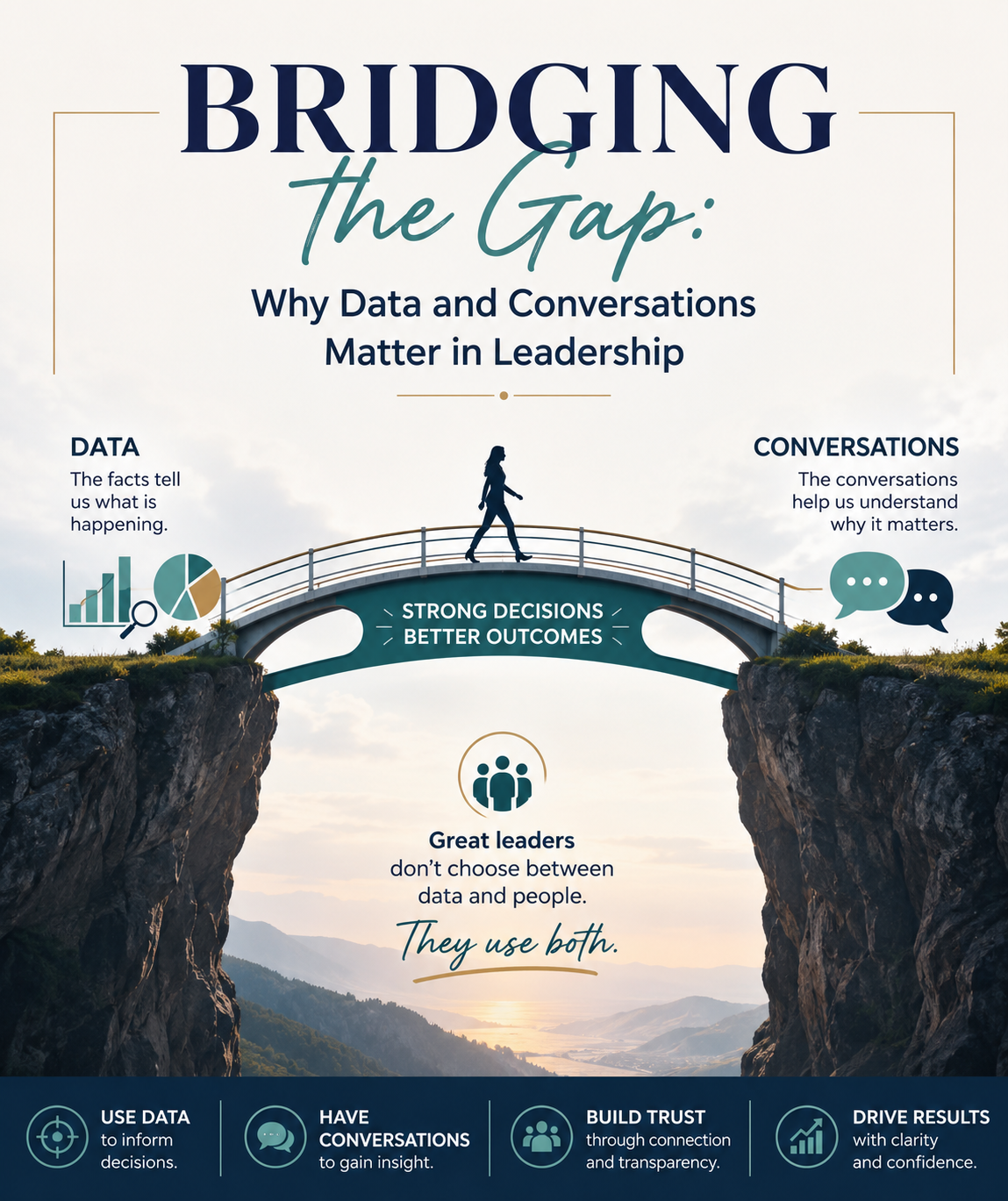

Bridging the Gap: Why Data and Conversations Matter in Leadership
Learn why balancing data and open conversations is crucial for effective leadership and project management. Discover strategies for measurable success.
In today’s fast-paced work environment, a common challenge arises: the disconnect between what data shows and what people perceive. Have you ever sat in a meeting where everyone seemed confident, only to be confronted by a dashboard that tells a contrasting story? In this post, we’ll explore the importance of aligning data with conversations in leadership and project management, helping you understand why this balance is essential for measurable success.
Understanding the Disconnect Between Data and Perception
Data and subjective opinions often diverge in organizational settings. Everyone involved might feel that progress is being made, yet the data might reveal significant issues. This discrepancy can lead to a disillusioned team and stalled projects. Let’s break down this disconnect further.
The Illusion of Progress
- Why This Matters: Many teams confuse busyness with productivity, believing that numerous meetings and messages equate to progress. However, the reality might be starkly different.
- What to Watch For: Look out for situations where activity does not translate into measurable outcomes. It’s essential to separate effort from actual progress.
- Example: A project team might have countless updates and discussions, yet the data shows that test cases are failing, signaling that the project is not where it needs to be.
## The Role of Leadership in Bridging the Gap
Effective leadership plays a critical role in addressing the disconnect between data and perception. Strong leaders recognize that data can provide clarity, while conversations can unveil deeper insights into the reasons behind the numbers.
Data as a Reality Check
- Why This Matters: Data does not lie; it reflects the actual outcomes of your initiatives. While emotions and perceptions can cloud judgment, data serves as an objective reality check.
- What to Avoid: Relying solely on subjective opinions can lead to dangerous assumptions and missed opportunities for improvement.
- Key Insight: Effective leaders don’t use data to assign blame; instead, they use it to create clarity and drive necessary changes.
Creating an Environment for Honest Dialogue
To effectively align conversations with data, organizations need to foster an environment that encourages open and honest dialogue.
Strategies for Honest Conversations
1. Define Success Clearly: Establish clear metrics and deliverables to eliminate confusion about what success looks like.
2. Use Data to Guide, Not Attack: Frame discussions around data positively to promote collaboration rather than defensiveness.
3. Encourage Team Insights: Trust your team’s insights; they are often closest to the issues and can provide valuable context that data alone cannot reveal.
Conclusion
In conclusion, the interplay between data and conversations is crucial for effective leadership. While data provides the truth, conversations offer the context needed to understand and address challenges. By balancing these elements, leaders can foster a culture of accountability and continuous improvement, ultimately driving success. Remember, the goal is not to choose between data and people but to align them for transformational results.
Frequently Asked Questions
Why is it important to align data with conversations?
Aligning data with conversations ensures that decisions are based on measurable outcomes rather than subjective opinions, leading to better project management and leadership effectiveness.
How can leaders encourage honest conversations about performance?
Leaders can encourage honest conversations by creating a safe environment where team members feel comfortable sharing insights without fear of blame.
What are the risks of ignoring data in decision-making?
Ignoring data can lead to misguided decisions, resulting in wasted resources and stalled projects due to a lack of visibility into actual performance.